
How to track expenses on your phone in under a minute a day
Your phone is always in your pocket, so it is the best place to log what you spend. Here is a simple routine to track daily expenses on your phone and stick to it.
Our spending is tied to the places we go. Understanding where you go, and how often, is one of the most effective ways to spot unnecessary expenses.
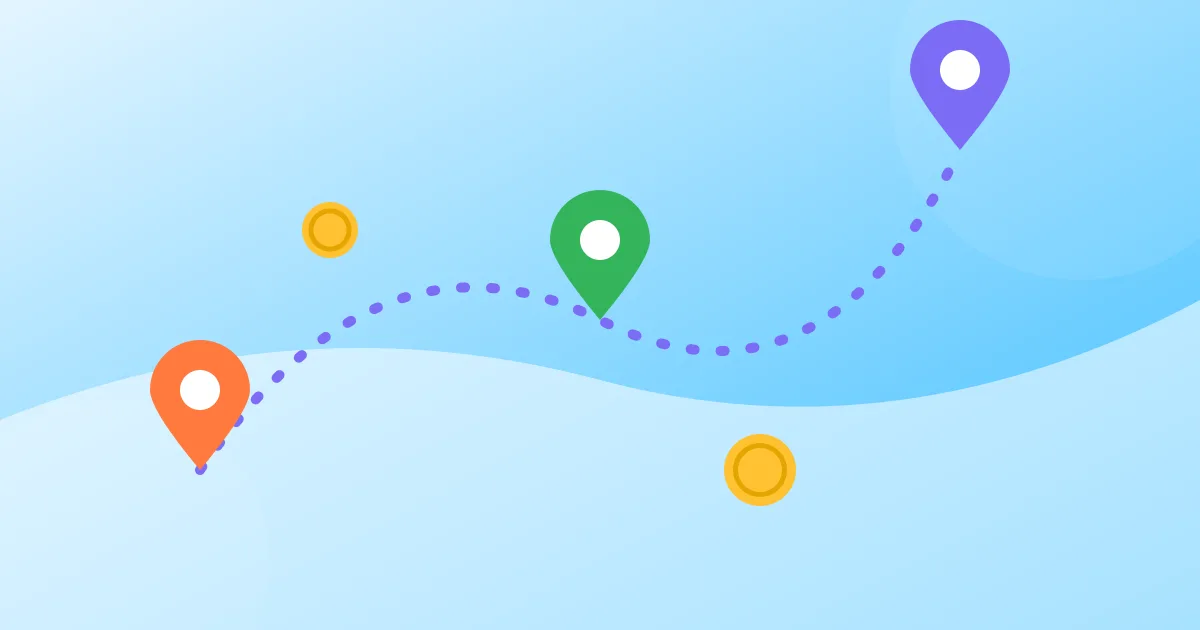
When we try to cut spending, we usually think in categories: food, leisure, transport. But there is another, often more revealing way to look at your money: asking where you spend it. Most of our purchases are triggered by a place. The café downstairs from the office, the bakery on the way home, the Saturday trip to the mall, the petrol station near your house. Tracking your trips and the places you visit brings invisible habits to light, and with them, easy savings.
A large share of what we spend is not planned. It happens because we walk past a temptation at the right moment. If your daily commute passes a pastry shop, the odds of stepping inside rise sharply, especially at the end of the day when you are tired.
Retailers know this very well. That is why a shop’s location matters so much, and why supermarket checkouts are surrounded by small impulse items. Understanding this mechanism is the first step to mastering it.
When you start tracking the places you visit, several things quickly become clear.
We almost always underestimate how often we go somewhere. “I go to the café now and then” becomes, with numbers to back it up, “I went seventeen times this month”. Multiply that by the average spend per visit and the cost becomes obvious.
Some places come with a high bill every time: the mall, certain restaurants, the supermarket where you always buy more than planned. Others are frequent but cheap. Crossing frequency with amount lets you identify the two or three places that weigh most on your budget.
Travel itself has a cost: fuel, taxis, parking, tolls. Tracking your trips helps you see which journeys could be combined, avoided or done differently, on foot or by public transport.
If a place makes you spend every time you pass it, changing streets is sometimes enough. This is not about willpower, it is about environment. It is easier to resist a temptation you do not see.
Doing several errands in one trip cuts transport costs and the number of chances for impulse buys. A weekly list and a planned route beat five small outings.
For places you do not want to give up, set a simple rule: two visits a week to the neighbourhood café, one trip a month to the mall. A clear rule is easier to follow than a vague intention.
A bottle of water, a snack or coffee in a travel mug is often enough to avoid emergency purchases, which are among the most expensive per unit.
Tracking your trips raises a legitimate question: where does that location data go? This is essential. A GPS position reveals a huge amount about a person: their home, their workplace, their habits, the people they see. That information should never be collected without good reason.
Pennoway was designed around this constraint. Visit detection runs on your phone: the app compares your position with the places you chose to save, such as your café or your market, without sending your movement history to a server. Only the places and visits you confirm are synced. You can turn location off at any time, and the app works perfectly without it.
In practice, you save the places that matter to you: your café, your market, your petrol station, the gym. When you go there, the app detects the visit and can suggest logging the related expense, with your usual amount already filled in. One tap confirms it.
The places map then shows your visits, and statistics tell you how much each place cost you over the month or the year. That is often when the penny drops: seeing that one place accounts for 15% of your monthly spending changes how you think about it. It is daily spending insight that a classic budget app rarely gives you.
Place tracking is an observation tool, not an end in itself. It does not replace a budget, it sheds light on it. Nor is it a way to feel guilty: coffee with friends has a value that numbers cannot measure. The goal is to make conscious choices, not to remove every pleasure.
Our spending follows our movements. By looking at the places you visit, how often you go and what they cost, you quickly identify the habits that weigh on your budget. Changing your route, combining errands, setting a rule per place and preparing before you leave are simple levers. And with a money manager that respects your privacy, you get those insights without giving up any of your freedom.
Your phone is always in your pocket, so it is the best place to log what you spend. Here is a simple routine to track daily expenses on your phone and stick to it.

Saving is not only for big salaries. Here is how to save money on a low income, starting with small amounts, small expenses and habits that last.
Cash disappears without a trace. Here is a simple method to know where your notes and coins go, without spending hours on it.
Budgeting methods, saving ideas and Pennoway news. Free, no spam, one-click unsubscribe.